The Unregulated Crisis of U.S. Surrogacy: One Stillbirth, One Woman’s Crusade, and a System Built for Disaster
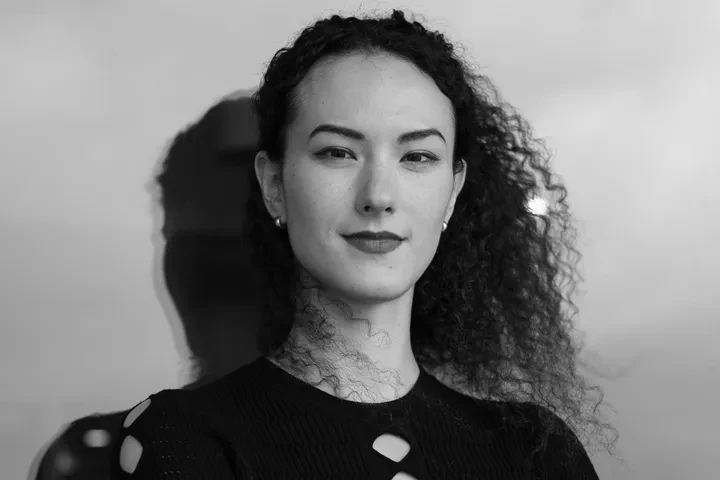
Cindy Bi should not be sharing this story with me. Multiple legal barriers stand in her way: first, a binding confidentiality agreement signed when she, a venture capitalist who backs more than a dozen unicorn startups, hired a gestational carrier for her only male embryo in 2023, requiring all details of the arrangement stay out of public view and away from press. Next, there is an active restraining order against Bi, paired with a court mandate that bars her even from naming the surrogate at the center of Baby Leon’s stillbirth. Last, there is the unwritten rule of public discourse: attacking a woman who nearly died carrying your child is widely considered socially unacceptable.
Yet Bi is speaking to me anyway. She has shared a 3,000-document folder with me, packed with court filings, reports filed against the other side with professional groups, insurers, employers and law enforcement, email correspondence with her legal team, and messages exchanged with Bay Area fertility influencer Dr. Aimee Eyvazzadeh, known online as the “Egg Whisperer.” Bi frames herself as a whistleblower on a mission to protect unborn children born through surrogacy. Her advocacy website opens with a biblical quote: “Establish justice in the courts. Amos 5:15.” Since 2024, she has accumulated nearly $1 million in legal fees, a cost she willingly bears to honor what she calls her son’s legacy.
“I want the surrogate to be exposed for what she did, held up as a warning to everyone else,” she told me. “I hope she ends up in prison.” Preferably, she says, convicted of murder.
A Wild West Industry Built on Silicon Valley Demand
Commercial surrogacy is already a massive industry in the United States, pulling in roughly $5 billion in annual revenue as of 2024, and analysts project the global market will grow nearly tenfold over the next decade. It has become particularly common in Silicon Valley, where a growing cohort of tech investors and executives—from OpenAI CEO Sam Altman to Dropbox co-founder Drew Houston—have turned to the practice to build their families. More than a dozen major tech companies now offer five-figure financial subsidies for employees who choose to outsource gestational labor. For many in the industry, growing a child has become normalized as a straightforward, arms-length business deal.
But both intended parents (often shortened to IPs in industry jargon) and gestational carriers (or GCs, the dehumanizing term for the people carrying the pregnancy) are almost always blind to how little regulation governs the industry, and wildly unprepared for when things go wrong. Only one U.S. state, New York, requires surrogacy agencies to hold an operating license. While the U.S. is the global leader in commercial surrogacy, it also has the highest maternal mortality rate among developed nations, and one of the highest stillbirth rates—a crisis many public health experts call a “public health emergency.”
Carrying a fetus genetically unrelated to the carrier more than triples the risk of severe, potentially life-threatening pregnancy complications, a statistic rarely shared with prospective surrogates. IPs are not required to disclose full medical histories, including genetic conditions that could harm the gestational carrier. They do not have to be honest about how many children they already have, why they need a surrogate, or how many other surrogates they have carrying their pregnancies at the same time. Do you ever really know who is carrying your child, or whose child you are carrying?
Meanwhile, the U.S. is deeply divided over who gets to control a pregnant person’s body. The growing acceptance of “fetal personhood” laws across many red states means that losing a pregnancy can already be charged as a felony, punishable by life in prison in some cases. That framework is already fraught when a woman is carrying her own child; it becomes exponentially more complicated and dangerous when the carrier is not the genetic or legal parent of the fetus.
Many of the problems that derailed Bi and her surrogate’s surrogacy journey are far more common than most people realize. But these conflicts rarely see the light of day. They rarely shape policy or set legal precedent, because they are almost always forced into private spaces, hidden by strict confidentiality clauses and resolved through closed-door arbitration. Stark wealth inequality between the two sides means intended parents almost always have the resources to file lawsuits and wage years-long public and legal campaigns, while surrogates who feel wronged are usually forced to rely on free pro bono legal help and crowdfunding on GoFundMe to defend themselves.
The bitter conflict between Bi and her surrogate lays bare how, in a system with almost no oversight and massive power gaps between parties, what is supposed to be a miracle of family building can quickly turn into a catastrophe that destroys lives.
The Journey Begins
Cindy Bi met her future husband Jorge Valdeiglesias on April Fools’ Day 2016, on a warm Friday night at Molly Magees, an Irish pub and dance club in Mountain View, California. Valdeiglesias spotted Bi on the dance floor: heart-shaped face, long black hair, a slim size-zero frame. He bought her a shot of Don Julio tequila. A Chinese immigrant and startup founder who would later land on a list of “30 of the Most Successful Early-Stage Startup Investors,” Bi checked his Google employee badge to confirm it was authentic.
“I’m older than you,” she told him. She was 36, he was 28, with a boyish, rumpled demeanor. “But that’s okay, I froze my eggs.” Valdeiglesias was caught off guard by her bluntness—he had just approached her for a casual night out—but it worked.
When the couple was ready to start a family six years later, surrogacy was an obvious choice for Bi. At 43, Bi felt she was too old to carry a pregnancy safely; she also said she was taking a medication that raised the risk of serious complications. Bi never mourned the choice to not carry her own child. In a Facebook group for prospective intended parents, she wrote: “I’ve been prepared for this for almost a decade.”
At first, Bi and Valdeiglesias considered implanting two embryos at once to have twins. Their fertility doctor strongly advised against it, citing elevated risks to both the fetuses and the surrogate. Instead, the couple settled on “twiblings”: two children gestated by separate surrogates, born just a few weeks or months apart. They planned for an older brother and a younger sister, both born in the year of the Dragon, the most auspicious sign in the Chinese zodiac.
They signed on with Surrogate Alternatives Inc. (SAI), an agency based in Southern California. During their required psychological evaluation, Bi disclosed she took an SSRI for PTSD caused by work-related stress, but hoped to wean off the medication soon. SAI quickly matched the couple with a college-educated bank manager based in Virginia.
“She was perfect,” Bi told me. “Tall, healthy, young, had a good steady job. I bragged about her to all my friends. The only red flag I saw was that she was a single mom, but I decided to look past that.”
That woman was Rebecca Smith (I am using a pseudonym to protect her privacy, as she declined an on-the-record interview due to ongoing litigation and her confidentiality agreement; her full name is public record). Smith was a former college athlete who first became interested in surrogacy after watching a close friend struggle with infertility. The 34-year-old wanted to help a couple who could not carry their own child, writing in a Facebook post that she wanted to give them “the same love I found in becoming a mom.”
In her profile photos for the agency, the lean, fair-skinned Smith posed in denim jackets and athleisure with her 6-year-old biracial son, who I refer to as Ellis to protect his privacy. Smith had previously dated seriously, but told her psychologist that “it doesn’t work out when you are a single mom.” In her free time, she coached her son’s youth sports teams; when Ellis stayed with his dad (who remained a friendly presence in her life) on weekends, she ran errands and handled household tasks. She preferred cooking at home over eating out, and never skipped meals. Ellis had been born at almost 10 pounds, and her pregnancy with him had been uncomplicated except for one quirk: she did not start showing until she was seven months along.
SAI, the agency Smith signed with, was founded more than 20 years earlier by a former surrogate, and had a strong reputation in the industry. Smith liked the many safeguards it offered gestational carriers: intended parents went through rigorous vetting including psychological screening, and all had a documented medical reason for needing a surrogate. A detailed contract between the carrier and intended parents spelled out every term of the arrangement. A third-party escrow service held all funds and issued payments directly to Smith. She would receive allowances and reimbursements for housekeeping, maternity clothing, and other pregnancy-related costs. If she had to be hospitalized or miss work, she would be compensated for lost wages and childcare costs.
Most importantly, Smith’s employer-sponsored health insurance would cover the pregnancy as if it were her own child—a huge benefit. While paying a woman directly to carry a child is technically illegal in Virginia, Smith’s contract framed all payments to her as “reimbursements” for expenses. She planned to use the $45,000 in total reimbursements to pay off her student loans and build an emergency savings fund.
Smith met Bi and Valdeiglesias in a standard introductory video call arranged by SAI. In her psychological evaluation after the call, Smith spoke warmly of the couple, calling them “amazing.” The therapist wrote: “She feels they are ‘100% compatible.’”
In summer 2023, Smith and Ellis flew to San Francisco for the embryo transfer procedure. Bi put them up in a nice hotel close to her apartment, and planned a detailed sightseeing itinerary for their stay. Smith did not even ask to be reimbursed for her lost wages during the trip.
A doctor implanted Bi and Valdeiglesias’ only male embryo into Smith. Everyone was overjoyed when the implantation took. Bi asked Smith for permission to share a photo of the positive pregnancy test on Facebook, and Smith quickly agreed, even inviting Bi to tag her. The two texted constantly: Smith shared her early pregnancy nausea and talked about Baby Leon, Bi updated her on her constant work travel and her search for a second gestational carrier for their daughter. Smith even tried to recruit her own sister, then a coworker, for the second surrogacy role. When mild, harmless early bleeding sent Smith to the emergency room, Bi sent her a DoorDash gift card to lift her spirits.
But after that ER visit, Smith learned something that upset her: Bi had been sharing details of Smith’s health in private surrogacy Facebook groups, posting test results and crowdsourcing advice for Smith’s treatment. Bi did not use Smith’s name, but she included enough identifying details for members of the tight-knit surrogacy community to figure out who she was—a direct violation of their contract.
Smith alerted SAI to the breach but chose not to confront Bi directly, likely calculating that it was better to avoid damaging their working relationship so far into the pregnancy. After all, the surrogacy relationship is unlike almost any other: once an embryo is implanted, there is no turning back. A new life has already been started, and it has to go to term.
The Insurance Dispute That Unraveled Everything
In late 2023, a little more than halfway through Smith’s pregnancy, a Facebook comment left Bi deeply alarmed. She had posted publicly about Smith getting a new, higher-paying job, and the COO of ART Risk Solutions, an insurance firm that works with surrogacy clients, commented suggesting Bi double-check whether Smith’s new health insurance would still cover the pregnancy. Unsolicited outreach like this was common in the surrogacy Facebook groups, where industry professionals often promote their services. The ART Risk COO offered to look into the coverage question for Bi.
While SAI’s standard review had confirmed Smith’s new policy would cover the pregnancy, ART Risk came to the opposite conclusion. Bi was terrified by what she saw as a catastrophic mistake by SAI: pregnancy complications can run up five or six-figure medical bills, and Bi saw the agency she had paid to protect her only son as asleep at the wheel. Because SAI had made the mistake, Bi demanded the agency pay for a separate backup insurance policy for Smith. When SAI stood by its original assessment and refused to cover the cost of the new policy, Bi became furious.
She began posting about SAI, sometimes multiple times a day, in surrogacy groups to warn other intended parents. Sometimes she said Smith had told her about the job change, other times she claimed Smith had never notified her. She tried to keep Smith from feeling caught in the middle, assuring her: “It’s not your fault.”
It seemed like the two were still on the same page. “I just hate that it all happened!” Smith texted Bi. “I was so excited thinking the new job was surrogate-friendly.” Bi agreed that if Smith had known the policy would not cover the pregnancy, she never would have taken the job.
For Bi, this was never about the money. Smith’s new subsidized Affordable Care Act plan cost $391 a month, a tiny drop in the bucket compared to the roughly $200,000 Bi had budgeted for the entire surrogacy process. Bi told Smith they would lay low until Leon was born, then take legal action against SAI: “I want to show them what justice should look like.”
On December 15, a day where Bi sent Smith more than 50 texts about the insurance dispute, Smith felt liquid leak between her legs. She was 26 weeks pregnant, and feared her water had broken. She went to the ER, where doctors sent her home, telling her the leakage was not amniotic fluid. She should have been relieved, but she soon got another request from Bi: one of Bi’s attorneys wanted Smith to sign “a few forms.” Smith had already signed a power of attorney giving Bi and Valdeiglesias the right to make medical decisions for Leon. Now, she wondered if they were asking for control over her own body. (Bi declined multiple requests to share the forms in question with me.)
Smith confronted Bi gently: “I guess I’m a little confused. You and Jorge haven’t been joining any of my prenatal appointments to ask questions before. What changed?”
“After your ER visit, I have tons of questions,” Bi replied. “For example, was it due to the stress of Friday’s insurance discussion? If not, what can we do to prevent such episodes so baby can grow to full term?” By this point, Bi and Valdeiglesias had already found a second gestational carrier for their daughter, and Bi told Smith that process was going far more smoothly.
That same day, Smith returned to the clinic for a follow-up appointment for the leakage. She had already started taking the recommended precautions: sleeping on her left side and drinking a gallon of water a day. Once again, doctors told her the leakage was not amniotic fluid, and suggested stress may have caused the incident.
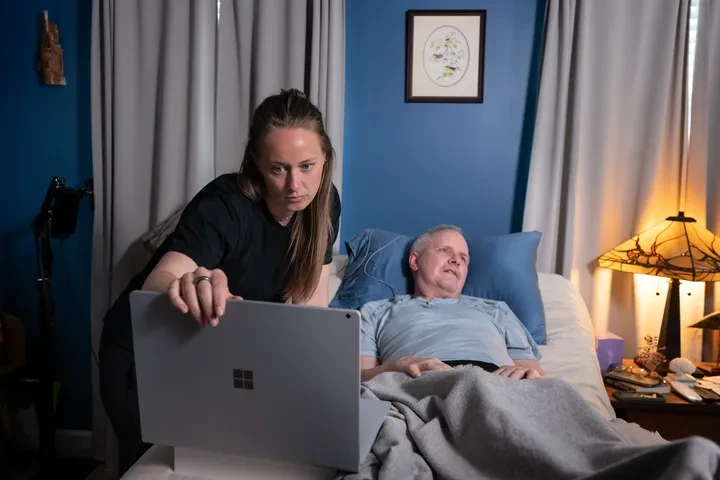
On January 1, 2024, 29 weeks into her pregnancy, Smith texted Bi to say she was back in the ER. This time, doctors confirmed her water had broken. Smith was admitted to the hospital for IV antibiotics, continuous fetal monitoring, and steroid shots to help speed up the development of Leon’s lungs. She would remain hospitalized until Leon was born.
Bi and Valdeiglesias had just spent New Year’s Eve celebrating in New York City. A few days later, Bi ordered a stack of snack boxes for Smith from Amazon: coconut water, freeze-dried cantaloupe slices. But she also began pestering Smith with questions: Why was she staying in the hospital instead of doing bed rest at home? Was she submitting her requests for lost wage reimbursement?
Meanwhile, on Facebook, Bi publicly claimed Smith had breached their contract by failing to notify her before changing jobs. A breach claim carried severe consequences: it would mean Smith was on the hook for any medical bills insurance did not cover, potentially totaling more than a million dollars—enough to bankrupt Smith, a fact Bi acknowledged. (Technically, Smith had notified them: Valdeiglesias had even sent her a text congratulating her on the new job.)
This dynamic lays bare one of the core imbalances in commercial surrogacy: if a surrogate breaches the contract, intended parents can stop paying her and stop covering her medical bills. But if an intended parent breaches the contract—for example, by sharing a carrier’s private information online or withholding compensation—the carrier almost always has to hire a lawyer to enforce the agreement. No matter what happens, intended parents get legal custody of any baby born through the surrogacy; any other arrangement would be classified as baby selling or human trafficking under U.S. law.
Bi began to suspect something was wrong with Leon after looking at photos Smith posted online. Even months into her pregnancy, Smith still looked slim. “You hardly look pregnant!” one commenter wrote approvingly. For Bi, this was not a compliment. Every pregnant woman is supposed to have a large belly at 29 weeks, she thought.
A few days into Smith’s hospital stay, Bi got an update that pushed her over the edge. Smith framed it as good news: despite the premature rupture of membranes, her doctors said Leon was healthy, and a growth scan estimated he was in the 30th percentile for weight. That did not sound right to Bi. The 30th percentile meant 70% of babies his gestational age were bigger than Leon. Smith was tall—shouldn’t that make Leon bigger, Bi wondered. She had expected her son to be above average in every way.
Smith maintained that the doctor said everything was fine. But Bi’s maternal intuition was screaming that something was wrong. She pressed Smith for details: Was she eating enough? Had she gained enough weight? “Small belly by itself, I brushed off,” Bi later wrote. But “30th, water leak, small belly, is Leon being suffocated and become defective already?”
Since Bi did not have Leon growing inside her, where she could protect him, she felt she had to do everything she could from her home across the country to keep him safe. She turned to surrogacy Facebook groups and Google to get second, third, even fourth opinions on Leon’s condition. On January 13, she emailed SAI asking for full copies of Smith’s medical records.
Bi, a direct communicator who prided herself on her candor, asked her husband if she was overstepping. Valdeiglesias reassured her she was not. “You’re just caring for your baby,” he said. “Like just what any other mother would do.”
The hardest part of being hospitalized, Smith told Bi, was being away from her son, who cried every time she had to leave him. Bi suggested Ellis could stay with her in the hospital. Ellis only spent two nights in the hospital during those weeks, sleeping on the recl