The Sun Is Shining on Bluesky’s Decentralized Social Revolution
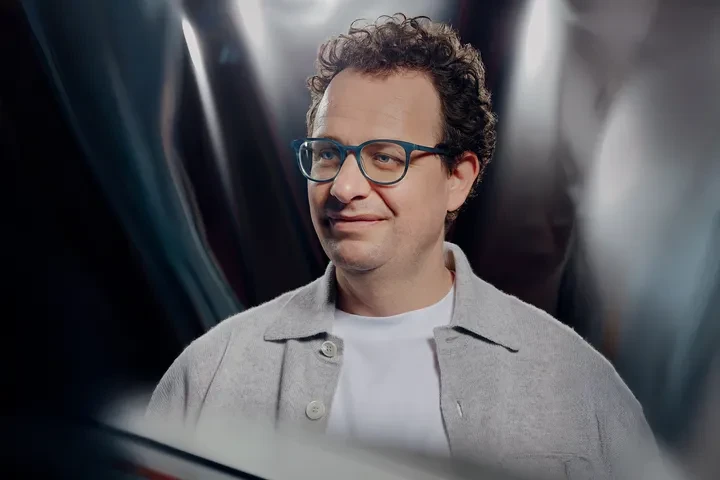
As I waited to meet Jay Graber, CEO of Bluesky, on the 25th floor of a downtown Seattle office building, I gazed out over the city’s waterfront and thought: What a frustrating irony. A thick, uniform wall of dreary gray fog swallowed every horizon, leaving nothing but muted gray in every direction. And here I was, about to interview the leader of a social platform literally named for clear, good weather—on camera, no less.
Then something almost too serendipitous happened. Minutes before Graber walked through the door, the fog burned off. Elliott Bay sparkled under bright sunlight, I could trace the rolling hills of Bainbridge Island all the way out to a snow-dusted distant peak, and the sky above? It was completely, perfectly blue.
Graber’s tenure leading Bluesky has been full of these happy coincidences, starting with her birth name, Lantian. For anyone who believes in nominative determinism, it’s a perfect example: Lantian translates directly to “blue sky” in Mandarin. Even the nickname she’s used for decades, Jay, adds to the luck—it evokes jays, the sky-dwelling birds that soar through open air.
Graber first joined Bluesky back in 2019, when it was nothing more than an internal experiment at Twitter. The original goal was to spin off a social platform that put far more control in users’ hands. That plan came to fruition when Bluesky launched as an invite-only platform in 2023; by the time it opened to the general public a year later, Twitter had rebranded and morphed into X, the right-wing echo chamber it is today. Bluesky quickly became a haven for leftists, liberals, and Never Trump Republicans fleeing the new X.
At 34, Graber cuts a very different figure than most social media chief executives. Earlier this year, after Mark Zuckerberg posed in a shirt that nodded to his near-kingpin status at Meta, Graber wore an almost identical shirt emblazoned with a call for a world without kings. The sartorial clapback earned glowing press, and Bluesky ended up turning a solid profit selling the design to supporters—but it also perfectly summed up Graber’s core belief: this project can never be controlled by a single leader.
True to that belief, Graber, a former software engineer, lights up when talking about the unique infrastructure powering her “kingless” social world. Underpinning both Bluesky and dozens of smaller independent apps is the AT Protocol (often called Atmosphere), an open set of rules that lets separate servers communicate with one another. This open-source framework lets independent, user-controlled digital spaces connect and work together when it makes sense for them. Two apps with competing ideas about moderation or advertising can choose to work in tandem—or go their separate ways. The call is entirely theirs.
Graber frames Atmosphere as nothing less than the democratized future of social internet, and she stresses that developers are already building new tools and platforms on top of it every day. In her ideal future, some of those projects will grow even larger than Bluesky itself. Her ambitions may not be kingly, but they are undeniably grand. For now, Graber is an insurgent, driven builder—and right now, the sun is shining on her project.
We sat down for an interview a few months back, when Bluesky had just crossed 25 million total users.
Where is your user count today?
34.6 million users as of now.
What does a typical workday look like for you right now?
Most of my time is spent hiring. We’re gearing up to build a bigger, more inclusive social experience for more people, both inside the main Bluesky app and across the wider protocol ecosystem.
How big is your team right now?
Back in November, when we started seeing our big growth spike, we were around 20 people. Now we’re at 25, and we’ll likely hit 30 pretty soon. We’re growing at a pace that feels sustainable for us, not rushing for the sake of growth.
What key milestones are you aiming to hit by the end of 2025?
Some features we’ve been working on for years—communities and improved verification—are something we’re really excited to launch. Verification is the most far along, and we’re rolling it out in stages. [Days after this interview, Bluesky launched new tools to help users authenticate their identities and crack down on impersonators.]
Tell me more about the communities feature.
A lot of people don’t realize that Bluesky already blends elements of Reddit and Twitter, because you can build custom feeds that function just like dedicated communities. For example, the science feed is run and moderated by working scientists, with its own community rules. But right now, you have to use a third-party tool outside the main Bluesky app to build and manage these feeds. Third-party services like SkyFeed or Graze let creators make these custom feeds today.
So right now you can create and manage multiple feeds in one interface, but it’s still a separate app. Are you bringing that functionality directly into the core Bluesky app?
We’ve talked to a lot of the people who run these existing feeds, and they’ve told us they want better native tools to turn these feeds into full communities within the Bluesky app. That’s the core idea: make it far easier for anyone to create and run a custom feed from within the app itself.
Do you have a timeline for that launch?
End of this year.
Let’s step back. How did you end up leading a project to build a decentralized social platform?
In college, I studied science, technology, and society, which was a really interdisciplinary major. I got really into studying virtual currencies early on, and I thought they were going to be massively disruptive, so I wanted to get involved in that space. I ended up working on Zcash, a cryptocurrency that combined decentralized technology with a focus on user privacy. I love getting in on the ground floor of a new technology and asking: what can we actually build with this?
After a few years, I realized we could build better social networks that didn’t run on a blockchain, but still borrowed many of the core decentralized components that made crypto exciting. I started researching and building decentralized social tools on my own. Then, when Jack Dorsey announced in 2019 that Twitter was working on a decentralized social protocol, I was already known as an expert in that space.
I’ve always thought of Bluesky as a classic skunkworks project inside Twitter.
It was a skunkworks, but we worked with outside contributors too. I was a contractor back then, and I valued that independence because old Twitter moved really slowly. Jack Dorsey was our biggest advocate inside the company, but then Elon Musk announced he was buying Twitter, and that threw all our plans off. No new projects were going to get shipped, especially not something as ambitious as Bluesky. That’s when we started brainstorming spinning off to build our own independent app.
You mentioned your crypto background. Bluesky’s largest investor is a venture capital firm that specializes in crypto. Is Bluesky more aligned with crypto startups than most people assume?
The term Web3 got so tied up with cryptocurrency speculation that it’s not a good label for what we’re doing. But if you think of Web3 as the next evolution of the Web 2.0 social internet, that’s exactly what we’re building. We’re transforming social media, which has always been controlled by centralized corporations, into something open and distributed. That was a core goal of the original Web3 movement—we just didn’t build on top of a blockchain technical foundation. You can get most of the same benefits using open web principles and older, proven Web 1.0-style technology.
For example, our identity system lets you use your own domain name as your username, so you can have
wired.comas your handle. That’s just a Web 1.0 technology we brought into the modern social media space. Our investors bought into that vision, and they’re excited to build out a broader developer ecosystem. We want investors who care about growing this entire new world of social media, not just making Bluesky big.Bluesky users can now post videos, and many people already see it as a direct competitor to X. Are you also gunning for TikTok?
We’re built on an open protocol, so other apps are already filling in these different niches across the ecosystem. There’s an app called Skylight that’s a direct TikTok alternative. It lets you post and edit short-form videos right in the app. Bluesky has video support, but it’s a secondary feature for us.
The great thing about an open protocol is that you can move from Bluesky to Skylight and keep all your existing followers. Your followers go with you across different apps.
How does that work exactly?
If you download Skylight from the app store, you can just log in with your existing Bluesky username if you want. You keep all your same followers, and any photos or videos you post to Skylight can show up on Bluesky too, and vice versa.
Did the Bluesky team contribute to building Skylight, or is it completely independent?
Totally separate.
What’s your relationship like with developers building other apps on the protocol?
We just held the Atmosphere Conference recently, and we met so many teams building apps we didn’t even know existed. There are private messengers, new moderation tools, all kinds of stuff. The big benefit for developers of an open ecosystem is that they don’t have to start from scratch every time they build something new. They already have 34.6 million existing users they can reach right away.
When you talk about this new ecosystem of connected apps, do you see yourself as the CEO of the whole ecosystem, or just of Bluesky?
I’m only the CEO of Bluesky Social. We built the initial protocol, and we maintain the main Bluesky app, but the protocol is going to grow and evolve on its own. Parts of it will become standardized, parts will be stewarded by the broader community, and it’ll branch off in new directions as more people contribute to it.
If one of these independent apps blows up and gets bigger than Bluesky, would that help or hurt your business?
It would help us—remember, we all share the same backend infrastructure.
Let’s say Skylight, the video app, goes massively viral. How does that shared backend benefit you?
That means you can see all those Skylight videos right on Bluesky too. It’d probably change how people interact with Bluesky, because all this new content would be coming in from another app. Also, one of the monetization paths we’ve talked about is offering developer services to teams building on the protocol.
How do you plan to make money long-term?
Subscriptions for Bluesky are launching soon. After that, we’re looking into building marketplaces that work across all these different apps. Other apps in the ecosystem are already testing things like sponsored posts. I do think ads will eventually find their place in some form, but we won’t do ads the way traditional social apps do. We’ll let different teams experiment and see what works best.
Lots of big creators have moved to Bluesky recently, but there’s no built-in way for them to monetize their content directly right now. Are you planning to change that?
We already give creators great traffic, and that can be converted into income pretty easily. One big advantage we have is we don’t downrank links in posts. If you’re a YouTube creator or you have a Patreon, you can post those links on Bluesky and you’ll get way more click traffic than on other platforms, even if you have a smaller follower count. That’s true for small creators and even large news organizations. We’ve heard from big news outlets that Bluesky delivers better click-through rates and more new subscriptions than many other major platforms. [WIRED can confirm this: Bluesky has become one of our top sources of traffic and new subscribers.]
High-profile Democratic figures like Barack Obama and Hillary Clinton have also joined Bluesky recently. Are you actively courting celebrities and influencers?
We’re doing some targeted community outreach, but we’re actually seeing really fast growth in sectors that might not have A-list celebrities but have massive engaged audiences, like sports media. Sports reporter Mina Kimes joined recently and made a starter pack for new users, and she gained a huge following really quickly. We’ve got big growth among game developers, sports communities, and science communities too.
Would you welcome former President Donald Trump to Bluesky?
Yeah—Bluesky is for everyone. We believe over time, the broader public conversation needs to live on an open protocol that lets people choose their own moderation preferences. We think the system is flexible enough to serve every use case and every person.
We’re in a moment where many people argue free speech is under threat. How do you think about that issue?
I think building on an open protocol is the most lasting foundation for free speech. We’re creating a digital commons of user data where you control your own identity and your own data. We’re building infrastructure that I hope will last for decades. Bluesky, the app, is just one place where speech can happen.
This model is a lot like the early web. Back in the day, most people accessed the internet through AOL. If AOL’s portal didn’t show you a site, it was really hard to find it. Then more browsers launched that let people access the whole wider internet. Now anyone can put up a blog and host their own views online. You can use larger platforms like Substack or Medium if you want, but you can also self-host your own content. That’s exactly the kind of ecosystem we’re building here, where anyone can self-host if they want. That makes the idea of “freedom of speech, not freedom of reach” really tangible. The Mediums of the world get to set their own moderation rules, but if users don’t like those rules, they can start their own site or host their own blog.
What does “freedom of speech, not freedom of reach” mean to you?
We built freedom of speech directly into the base layer of the protocol. Anyone can do the equivalent of launching their own independent blog, right off the bat. Then individual platforms like Bluesky get to decide how they prioritize content and who gets reach.
And “reach” here means whether Bluesky amplifies your posts, or doesn’t. So people can say whatever they want, but they have to accept how Bluesky moderates their content?
If you don’t like our rules, you can build your own platform or find another space that aligns with what you want. Within Bluesky’s walls, we set the rules.
Given your focus on decentralized spaces, I’m curious what you think about decentralized “network states”—the idea of startup countries, where groups of like-minded people meet online and pool resources to buy land and build their own communities, for example. Are you following the network state movement?
We’re going to need a lot of trial and error to build good governance for digital spaces, so maybe far in the future that work will translate into physical world governance. I see what we’re doing as building civic infrastructure in digital form. Social media is where most of us get our news, where we stay informed, and if we can make control of that space democratic, pluralistic, and open, I think that will lead to more democratic social structures down the line.
How do you balance building public civic infrastructure with running a for-profit company?
We run a lot of core infrastructure that serves other apps across the network, and that’s going to be very financially valuable long-term. Back in the early days of the web, the core internet protocols didn’t have monetization built into them, but that openness let anyone spin up a website. Then the companies that built the search engines and browsers to access that new web ended up becoming very large, successful businesses.
Do you still hold the same ambitions you had when you started in 2019, or do any of your original goals now feel impossible?
I still have the same big vision. Right now, Bluesky feels like Twitter, Flashes feels like Instagram, Skylight feels like TikTok. But the magic of this system is that you can build entirely new types of social experiences, or combine features from existing platforms in totally new ways that don’t exist yet. I’m really excited to see those new kinds of experiences launch. The long-term vision isn’t just to build a new generation of social apps—it’s to build a whole new open layer for the web: what Web3 promised to be, without the blockchain.
That reminds me of a conversation I had a decade ago with Brewster Kahle, founder of the Internet Archive, who talked about reinventing the web along almost exactly these lines.
I got my first open-source crypto job at Zcash through the Internet Archive’s Decentralized Web Summit. That was one of the first places I got to connect with all the people building decentralized web tools, and it shaped my whole perspective.
I wrote about the Internet Archive’s legal battles last year. Some parts of the book world fiercely support its digital lending program, others fiercely oppose it. I see a similar tension emerging among power users on Bluesky: some want the app to do far more aggressive content moderation, while that clashes with the core principles of decentralization, where ideally no single entity gets to ban or block users. Do you see this as a fundamental problem for Bluesky?
There will always be conflicts when one person’s idea of a good online experience clashes with someone else’s. People have very different ideas about what feels safe online. Every space needs some level of moderation. The point of building an open ecosystem is to let people with different points of view coexist, without forcing everyone to follow the same rules in the same space. They don’t all have to be in the same room. They can be in adjacent spaces, connected but separate, like two linked hotel towers.
At the end of the day, we set our own rules for what counts as acceptable behavior on the Bluesky main app, and if you disagree with those rules, you can branch off and build your own adjacent app on the protocol.
What’s your relationship with Jack Dorsey like these days?
Jack isn’t involved anymore. He invested in a range of decentralized technology projects early on, and he helped a lot of them get off the ground. He funds another distributed protocol called Nostr, which he probably prefers today. Nostr shares a lot of architectural similarities with Bluesky, but it works more like a cryptocurrency wallet—you have to manage your own private keys, so it requires a bit more technical savvy from users.
What’s your pitch to get people to join Bluesky right now?
This is a great time to join because you can help shape the culture and future of the platform. People who’ve created starter packs, built custom feeds, and gotten involved in the community have seen huge growth, even if they