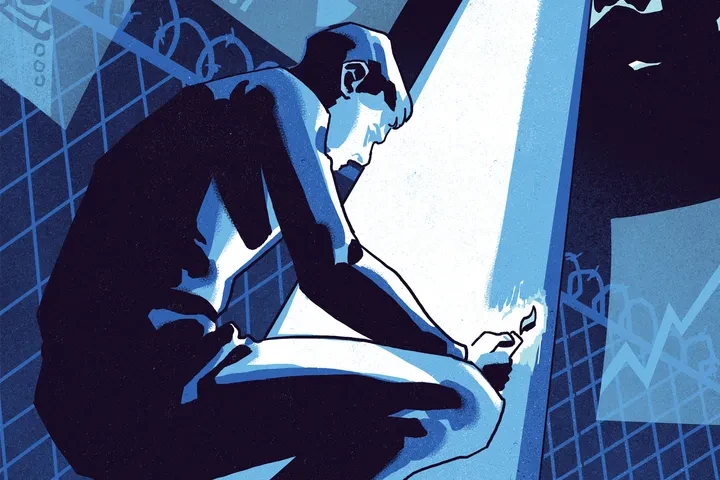
Editor’s Note: The Rogues Issue
For as long as WIRED has existed, we’ve held a deep, enduring fascination with rule-breaking outsiders. This magazine launched in the early 1990s, after all, born from a mission to champion the subversive, world-altering rise of the internet. We celebrated the hackers, hustlers, and big-dreaming mavericks who were obsessed with unlocking the potential of a newly digitized, interconnected planet.
Of course, back in those founding days, none of us could have predicted just what that rogue energy would ultimately unleash: a tidal wave of bad actors wreaking chaos across every corner of the web; a booming, mainstream industry of online conspiracy theorists whose dangerous convictions put everything from children’s public health to the stability of global democracies at risk; and a small circle of tech billionaires with unlimited budgets and platforms that stretch all the way from Silicon Valley to the White House. It’s still true: rogues built the internet and sparked the technological revolution that redefined modern life. But today, a twisted, far more powerful mutation of that same lawless spirit threatens to unravel much of the extraordinary progress technology and scientific inquiry have delivered. DOGE Boys, I’m talking to you.
In this edition of WIRED, we pull back the curtain on just how roguish, corrupt, and precarious our modern world has become. Matt Burgess shares the never-before-told inside story of Nigeria’s Yahoo Boys and the “scam influencer” who teaches them to run elaborate, sophisticated digital scams targeting American victims. Andy Greenberg traces the evolution of ghost guns, leading straight to the weapon Luigi Mangione is accused of using to kill a health care CEO in broad daylight—an attack that has turned Mangione into one of the most celebrated new internet rogues in recent memory. (Scroll down to watch what happened when Greenberg tried to build that exact weapon himself.) And Evan Ratliff delivers a sweeping, bone-chilling saga of the Zizians, a group of talented young technologists that became the world’s first AI-inflected death cult, accused of killing six people over years of chaotic, brutal violence.
Scam influencers? DIY ghost guns? An AI death cult? Yes, things are fraught right now. But we wouldn’t be WIRED if we didn’t carve out space for a little rebellious, roguish fun even amid the gloom—alongside a new wave of good trouble. Elsewhere in this issue, we profile a hopeful new generation of anti-establishment rebels who are redefining what it means to be a rogue today. There’s Amber Scorah, co-founder of a nonprofit that helps whistleblowers safely share critical information with the public. And there’s Bluesky CEO Jay Graber, who sat down with Kate Knibbs to lay out her vision for a truly democratized social internet. Plus, our Gear team rounds up the sleekest, most villain-worthy products to stock your very own supervillain lair.
If you take just one thing away from our Rogues Issue, let it be this: “Rogue” is never inherently a pejorative—even when it feels like more dangerous bad actors than ever, perched in the highest seats of power, are running roughshod over nearly every institution we rely on. In fact, I’d argue this moment calls for more rogues, not fewer. The idealistic rogues. The indefatigable rogues. A new generation of big-dreaming mavericks who can imagine what a better world could look like, and are willing to fight the status quo to get us there. So be the rogue you want to see in the world, and know that WIRED—with every ounce of rebel spirit woven into our DNA—will be right there beside you.