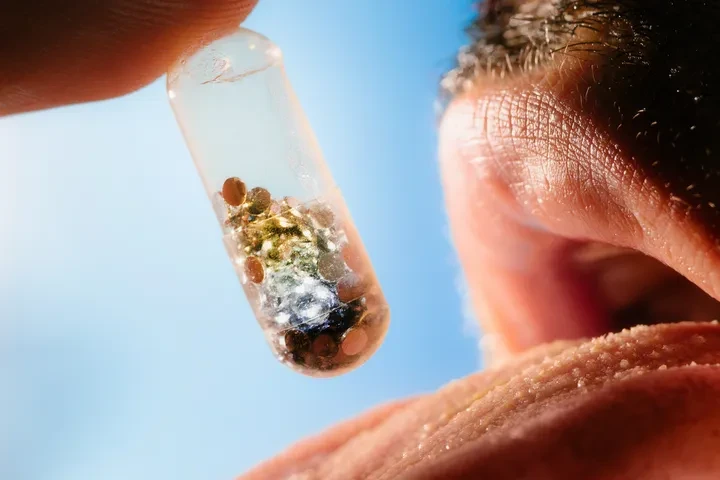
The Billion-Dollar DMT Kingpin Who Got Lucky Twice
For 48 straight hours, Akasha Song rode shotgun in a dust-caked Fiat pickup, cutting across the desert-dry scrublands of northeastern Brazil. This region, called the caatinga, stays blisteringly hot and parched for most of the year—so harsh that locals often nickname it portaria do inferno, or hell’s gatehouse. Behind the wheel was a man Akasha had met only the morning before, who spoke barely a word of English.
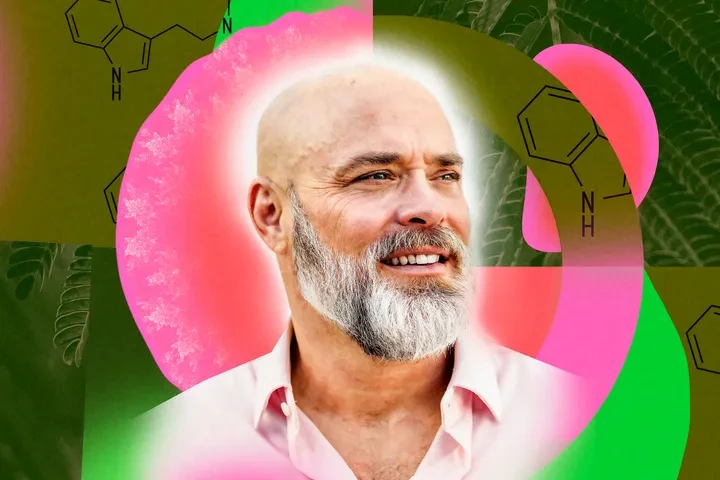
Akasha, a solidly built 43-year-old American in Lululemon athletic gear, with a shaved head, an unruly full white beard reminiscent of producer Rick Rubin, and wide, bright blue eyes, loved every minute of the journey. Most of the drive, he just listened to whatever the driver—we’ll call him José, not his real name—played on the truck’s stereo: Phil Collins, Brazilian singer Zeca Baleiro, anything that came on. He enjoyed watching the sandy hills and small towns roll past, stopping for meals at casual roadside spots. Akasha approached all travel with a childlike, giddy curiosity, but this April 2021 trip had a very specific goal: he believed José was leading him to a farm growing jurema preta, a tree whose inner root bark is packed with high concentrations of N,N-Dimethyltryptamine, better known as DMT.
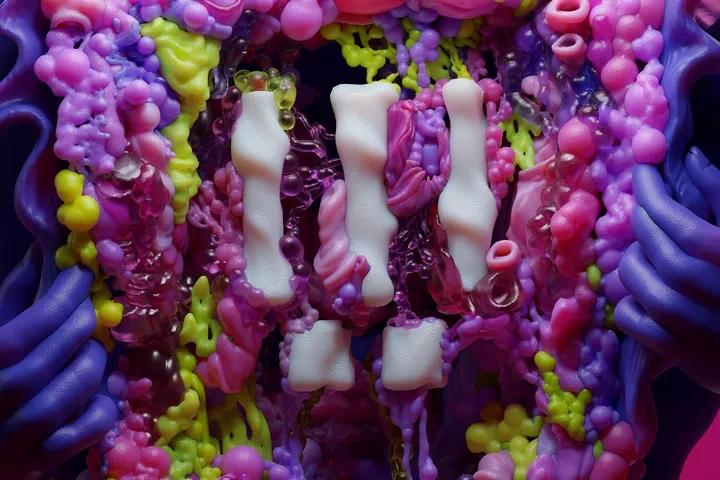
DMT is an extraordinarily potent psychedelic compound, capable of triggering short, mind-altering journeys to altered states of consciousness that are almost impossible to reach otherwise—some users even believe these trips take them to entirely separate planes of reality. For Akasha, the substance was both a sacred sacrament and his top-selling product. For five years, he’d run secret labs across the western United States, turning imported jurema bark (which is legal in the U.S.) into DMT (which is not). Under the dark web alias Shimshai, he’d sold tens of millions of doses to customers, packaged in bags emblazoned with his logo: a figure with closed eyes in ecstasy, a swirl of rainbow colors pouring out of their open skull. Now he’d come to Brazil to track down the ultimate source of this consciousness-expanding drug.
As the pair drove deeper inland, the landscape shifted gradually from arid desert to lush subtropical forest. Late that afternoon, José finally pulled off the road. He announced they’d arrived. Both men stepped out of the truck, and Akasha followed José off the pavement, over a wire fence, and into the woods. José stopped and gestured at the trees around him. “Jurema,” he said.
Confused, Akasha asked which tree he meant. Where was the farm they’d driven 14 hours to reach?
“All of it,” José replied.
That was when Akasha understood: every tree stretching across the endless wild forest around him—with their short, gnarled trunks and fern-like leaves—held the core ingredient he needed. From every pound of bark, his labs could produce hundreds of doses of DMT.
In that moment, Akasha says he felt like he’d just become the Pablo Escobar of psychedelics. “Holy shit,” he thought. “That is a lot of DMT.”
Today, looking back on that turning point in his rise and fall as one of the world’s biggest hallucinogen dealers, Akasha says he wishes he could claim he stood in that Brazilian forest and saw the potential to heal collective human trauma, or build a network of spiritual connections to other dimensions.
“But I didn’t,” Akasha says. “I saw billions of dollars.”
The first time you smoke, vape, or inject a few dozen milligrams of DMT—sometimes called “dreams,” “deems,” or “spice” (a nod to Dune, for the curious)—the next five to 15 minutes will be unlike any experience you’ve ever had. In his book The Spirit Molecule, which documents the first modern clinical study of DMT in humans, psychiatrist Rick Strassman uses a television metaphor to separate DMT’s effects from other psychoactive substances. “Rather than merely adjusting the brightness, contrast, and color of the previous program,” he writes, “we have changed the channel.”
In user trip reports shared on online forums and descriptions shared with medical researchers, DMT users outline three core tiers of experience, shaped by dose size and how open your mind is to the effects. The first is what many long-time users call the “waiting room”: a wall of interwoven fractal images fills your vision, even when your eyes are closed. You may hear non-existent sounds, or be flooded with unprompted euphoria or crippling fear.
At the second level, this geometric landscape unfolds into full 3D space, and you may find yourself transported anywhere: the moon, a medieval castle, a tropical beach, inside a pyramid, or even a pulsing Russian bathhouse roughly the size of a womb. You may exist in both this new place and your physical body at the same time, or leave your body entirely to inhabit the new realm fully.
In this other space—described by many users as a separate dimension—you will almost certainly encounter “entities.” Common encounters include elves, insectoids, reptilians, aliens, gods, and clowns. One test participant reported being cared for by a hyperintelligent 3-foot-tall Gumby. These beings may ignore you, talk to you, tear you apart and eat you, perform experimental “surgery” on you, wrap you in love and sexual pleasure, or any mix of the above.
DMT forums are full of endless debate over whether these entities are just projections of the human mind or objectively existing non-human life forms. At least one Reddit thread asks whether having sex with a DMT entity counts as cheating on a partner. (Another user complained that entities kept masturbating while he tried to have a conversation with God.)
At the third, rarest level of trip, psychonauts describe transcendent experiences like oneness with the universe, becoming God, accepting death, or floating in an infinite void. In some cases, users report living entire lifetimes in these other realms before returning.
Back on Earth, though, the whole experience is over in less than 20 minutes. DMT is nicknamed “the businessman’s trip” because its most intense effects fit easily into a standard lunch break. DMT is actually the active core of ayahuasca, the better-known psychedelic brew used in South American spiritual ceremonies, which produces effects that last up to eight hours. Without the additional compounds in ayahuasca that slow DMT’s breakdown in the body (and the compounds that famously cause users to vomit), DMT moves through the brain at turbo speed.
Despite its brevity, preliminary research suggests DMT can produce long-lasting psychological and even therapeutic effects. While some medical experts warn DMT can worsen existing mental health conditions, a 2022 study of 25 clinically depressed participants found that 40% of those given one or two doses of DMT were in full remission six months later. Though some users report terrifying, even traumatic experiences, others say their short, ultra-intense trips help them re-examine emotional trauma, process past abuse, get a glimpse of the divine, or experience a kind of self-annihilation that reduces their fear of death.
For all its otherworldly effects, DMT is surprisingly easy to find in the everyday world. It exists in small amounts in every human nervous system, though its exact purpose there is not fully understood (some research suggests it plays a role in dreaming). It grows naturally not just in jurema preta—the plant it is most easily extracted from—but in dozens of other species, from citrus tree leaves to the internal organs of rabbits.
One of the most powerful psychoactive substances humans have ever consumed, in other words, is already all around us, and inside us. All it takes to unlock DMT’s full transcendental potential is someone willing to do a simple chemical extraction—and violate U.S. federal law, specifically Title 21, section 841 of the U.S. legal code.
For roughly seven years, for hundreds of thousands of Americans, that someone was Shimshai. To his friends, he was Akasha Song. To the federal agents hunting him, he was best known by his legal name: Joseph Clements.
Before Akasha Song discovered DMT, Joseph Clements discovered LSD. In 1992, when he was 14, a friend gave him a tab of acid at their high school near Houston, Texas. He took it, went home, and had the most profound conversation of his young life with his father, who he says never noticed his son was tripping.
“Who am I? Why am I here?” he remembers asking his father and himself. “It was the first time these big, fundamental questions had ever hit me.”
For most of his remaining teen years, Clements took acid about once a month. He’d go out with friends, talk, listen to music, and watch them get drunk. Often he was the only one tripping. He loved the depth—even the sense of telepathy—that LSD brought to his otherwise mundane teen social life. “All that boring, normal stuff, I would do that on acid,” he says. “And I did that just my whole damn childhood.” He kept a small blank business card and marked it every time he tripped. By the time he lost the card, it was full on both sides.
If not for acid, Clements would have had a typical Texas upbringing. He loved BMX biking and going to church. He was named after his father, Joseph Carmichael Clements, a Catholic engineer who worked at Texas Instruments. His mother, who worked in oil and gas, was a Baptist. They divorced when he was 6. He went to Sunday services at both churches, and joined Methodist and Lutheran youth groups too. From his limited view of the world, he thought he was exploring the full breadth of religious experience.
Around 10th grade, Clements stopped caring about school. He was also diagnosed with ADHD before most of his peers. When he got in trouble for disrupting class or ignoring homework, his father always defended him, usually blaming his disorder. Eventually, Clements remembers, school staff were so intimidated by his father’s interventions that he felt almost immune to consequences—a sense of invincibility that would stay with him, to some degree, for the rest of his life.
That sense of invincibility stuck even as his life grew far harder in later years. In his late teens, he says he began to confront the memory that his father had sexually abused him when he was young. The memories had always been there, he says, but he’d never allowed himself to face the resentment he felt. He cut off contact with his father, moved in with his mother instead, and didn’t speak to his dad again until the elder Clements was dying of liver failure decades later.
After high school, he got a job at a restaurant, married a waitress who worked there, and they had a son. Soon, he says he discovered his wife was addicted to opioids and was selling their belongings to fund her habit. They split up.
A natural salesman with “the gift of gab,” as his mother puts it, Clements found work selling vacuums door-to-door, building websites, and cutting deals for billboard ads in malls. He was also charged multiple times for marijuana possession and got two DUIs—one while he was on probation—leading to a six-month prison sentence.
While he was locked up, his estranged wife died of a drug overdose. Their son, 6 years old at the time, was the one who found her body.
Clements got out and rebuilt his life. His son, who’d lived with relatives while Clements was in prison, moved back in with him. He remarried, had a daughter, and stopped using any drugs besides marijuana, which he and his second wife budgeted for carefully. He built a successful career running marketing for local businesses and consulting for entrepreneurs. He embraced Robert Kiyosaki’s Rich Dad, Poor Dad philosophy of building passive-income businesses to get financial freedom. He settled into mainstream Texas life, which he describes as “drinking and getting fat and working and cussing.”
Then on New Year’s Eve 2012, when he was 34, Clements went to a String Cheese Incident concert, and his life changed for good.
That night, at the jam band show near Denver, Colorado—invited by a friend of his wife—Clements took acid for the first time in more than a decade. He found himself in a crowd of thousands of like-minded people of all ages, dancing, wearing wild clothes, singing, some twirling fire batons, most clearly tripping too. He immediately knew these were “my people”—he’d found the community he’d been searching for since his first hit of LSD 20 years earlier. His old life back in Texas felt tragically empty by comparison.
When he got home to Houston, he told his wife he wanted to quit his job, sell everything they owned, and move to Colorado. She responded to this midlife crisis by leaving him and taking their daughter. He fought for custody for years, and lost.
Clements grieved the end of his family, but his rebirth after the String Cheese Incident show was no passing phase. He began preparing to move to Colorado with his son, and sought out the same community—hippies, for lack of a better word—in Houston first. He walked away from his career and began traveling nonstop to music festivals from Michigan to Costa Rica, sometimes bringing his son along, taking LSD, mushrooms, and any other psychedelic he could find.
As Clements reinvented himself, he says he could no longer stand sharing his father’s name. So he picked a new one, inspired by the Akashic records: a supposed ethereal archive of every life experience, past and present, that 19th-century European clairvoyants claimed they could access.
It was also around this time that Akasha Song discovered DMT. A friend from the festival scene gave him a small capsule of what he called “dreams.” Akasha looked the drug up online and read that one dose was equal to 300 hits of acid—an exaggeration, but one that grabbed his attention immediately.
One evening, sitting on the floor of his Houston home, Akasha placed a pinch of the pale yellow crystals—they had a faint, perfumed new-shoe smell—on the ash in his weed pipe. He lit it and took his first hit. Akasha’s vision dissolved into what he calls “platonic shapes,” the geometric waiting room that greets new DMT users. That was the full extent of his first trip. But as alien as DMT’s effects were, he says he felt like he was slipping into a comfortable, natural mental state, exactly where he was meant to be. “I just remember falling in love immediately,” he says.
Over the next few months, Akasha smoked DMT dozens of times. Describing the details of those escalating trips is hard for him. As its nickname suggests, DMT’s effects are a lot like dreams: as vivid as the experience feels in the moment, most users find the sensations fade quickly once they return to the material world. But he still has a sharp memory of one particular trip, the one he calls the high point of all his psychedelic experiences.
That climactic journey, Akasha says, started with a feeling like he’d fallen and hit his head. When he came to, he was lying on his back in an endless void, and seven humanoids made of pure light were gathered around him. Looking up at them, he realized they were somehow every person he had ever known, all wrapped into one.
One of the entities pulled him up to a sitting position and gestured out across the void, which Akasha now saw was filled with infinite other groups of light-entities circling infinite other people, each either waking up or falling asleep. The difference in their awareness created a sine wave Akasha could feel stretching out trillions of miles. The shouts of those waking up blended into what Akasha heard as a resonant “music of epiphany.”
At that point, Akasha says he understood that his physical life on Earth was a dream, and it was fading. He felt a pang of sadness that he would soon forget his mother, his children, and everyone he loved. The entities seemed to sense he wanted to keep dreaming. They laid him back down, and as the trip ended, he returned to his body.
For days after, Akasha barely wanted to speak to anyone. He was still convinced the people around him were just characters being played by the entities he’d met—that he’d seen the true reality under human experience, and his whole waking life was a dream. On some level, he says he has never stopped believing that.
Akasha had heard that making DMT was possible—even relatively easy—an idea that felt almost miraculous to him. A friend told him a woman they knew who sold tie-dye shirts at music festivals knew how to do it. When Akasha asked her, she invited him to her home on the outskirts of Houston the next day. The moment he arrived, she sat him on her living room couch, handed him a pipe, and told him to smoke a dose first—likely to confirm he wasn’t an undercover cop. By the time he came back to reality, she’d already laid out all the precursor ingredients for DMT in front of him: lye, the solvent naphtha, and powdered jurema bark.
She walked Akasha through the extraction process, which he wrote down carefully in his journal: Mix lye with hot water in a mason jar. Add the bark powder, which turns into DMT-rich sludge. Pour in the naphtha and stir. When a yellow-tinted solution separates from the jurema sludge below, siphon it off with a turkey baster, squirt it into a baking pan, then put it in the freezer. The crystals that form at the bottom, ready to smoke as soon as the last solvent evaporates, are pure DMT.
Akasha’s teacher gave him a kilo of bark to get started. He and a friend immediately drove to Ace Hardware, bought naphtha and lye, and followed the process he’d just learned. They smoked the results the next day, giddy at the magic of DIY psychedelic alchemy. Then they drove around town, selling their DMT to friends, instantly making back the money they’d spent at the hardware store plus a small profit. “It was the most amazing thing,” says Akasha. “I had figured out how to make my most valued possession in the world.”
By December 2013, Akasha followed through on his plan to sell everything and move to Colorado. He couch-surfed for a while, briefly joined a cult on a ranch, then moved in with a group living in a geodesic dome in the mountains. His son stayed with him sometimes, and sometimes with Akasha’s mother. The whole time, Akasha made DMT in mason jars and sold it to meditation circles and at music festivals, using whatever freezer was available to crystallize his solutions, sourcing bark from a Dutch website his teacher had recommended. (The bark