Uncanny Valley Big Interview: Alexis Ohanian on Digg's Relaunch, AI for Grief, and Why Women's Sports Is No Charity
This interview has been edited for length and clarity.
Long before Alexis Ohanian cofounded Reddit, married one of the greatest tennis players of all time, became the public face of intentional fatherhood, or built his reputation as a serial entrepreneur, he stood before his 2001 high school graduating class to deliver a 3-minute-20-second commencement address. He told his peers: “Your impact shouldn’t be judged by how much media attention you earn or how many zeros are on your paycheck. It’s measured by the change you make in the world around you.”
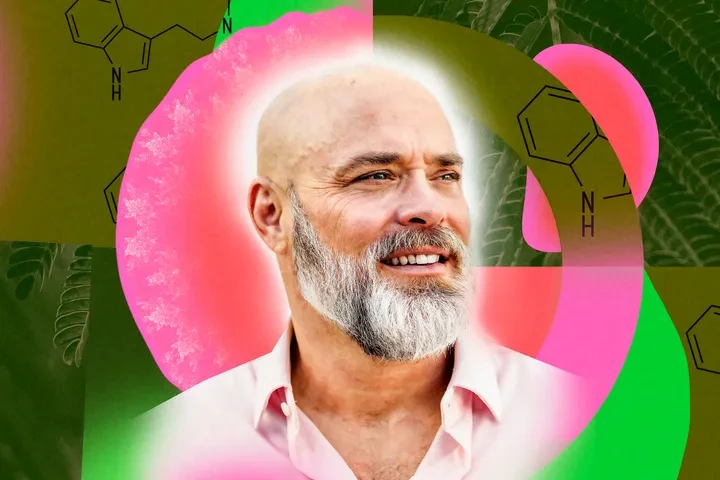
That early advice ended up being a blueprint for the life Ohanian would go on to build. Now 42, the Reddit cofounder built a platform that once billed itself as “the front page of the internet,” and even after stepping away from the company, he never stopped building and investing. Over the last two decades, he’s backed, advised, and mentored hundreds of early-stage startups, and leveraged his platform to champion causes from paid paternity leave and net neutrality to greater inclusivity in tech. This March, Ohanian announced his return to the social media space: he’s partnered with Kevin Rose—one-time rival and creator of early social platform Digg—to buy back the brand for an official relaunch.
Ohanian joined me for the first Big Interview installment of Uncanny Valley. New episodes drop weekly on your favorite podcast feed, featuring one-on-one conversations with leading voices from across the WIRED ecosystem.
KATIE DRUMMOND: We always open these interviews with a quick round of rapid fire. You ready?
ALEXIS OHANIAN: Yep, I’ve had my coffee already.
DRUMMOND: Fair enough. What’s your most active text thread right now?
OHANIAN: It’s the group chat with my wife and our nannies.
DRUMMOND: That tracks—you’ve got two little kids. Next up: ChatGPT or Claude?
OHANIAN: I bounce between both, honestly. I use ChatGPT more often, but Claude is way better at writing and coding, for what it’s worth. I guess I should lean into ChatGPT anyway—most of its training data came from Reddit, after all.
DRUMMOND: We’ll circle back to that later. Now, you worked at Pizza Hut in high school, right? Hope that’s not a sore subject.
OHANIAN: Not at all—nothing to be embarrassed about there.
DRUMMOND: Agreed, I worked at Tim Horton’s back in the day, so I get it. Favorite pizza topping?
OHANIAN: Jalapeños.
DRUMMOND: Bold choice. What was the first video game you ever bought with your own money?
OHANIAN: Oh man, with my own money? Let me think… It was probably that helicopter combat sim Comanche: Maximum Overkill. I’d just gotten this brand new 486SX computer—total beast back then. I was so hyped for it.
DRUMMOND: Now I’m dying to look that up and relive it on YouTube. My first was something like SimTower, and I still get random cravings to build those condos. Next question: New York or San Francisco?
OHANIAN: New York, hands down. I was born in Fort Greene, c’mon.
DRUMMOND: American football or soccer?
OHANIAN: I’ll always be a diehard American football fan. That’s the sport I played, the sport I loved growing up. I’ve come around on soccer, don’t get me wrong—but I was raised on the NFL, that’s just how it is.
DRUMMOND: What’s your favorite Reddit AMA of all time?
OHANIAN: The one that always sticks with me is the vacuum repair technician. It’s one of the legendary AMAs, and it really shows what Reddit does best. It was just a random guy who loved vacuums and knew everything there was to know about them, and the whole conversation was totally engrossing.
DRUMMOND: And now anyone can get great vacuum advice from ChatGPT. Next: Wimbledon or the US Open?
OHANIAN: US Open. I’m a New Yorker at heart, I love the crowd energy. That night match vibe at the US Open is unmatched, it’s inspired me in so many ways. I have to give it its dues.
DRUMMOND: Last question: lake or ocean?
OHANIAN: I’m not really a water person, honestly. I’m an earth guy—I like being solidly on land. But if I had to pick, ocean is more fun.
DRUMMOND: You mentioned you were born in Brooklyn, but you grew up in a Maryland suburb, right? One of the first planned communities in the U.S.
OHANIAN: Wow, that’s a deep cut.
DRUMMOND: Your mom was German, your dad was Armenian—can you talk a little about how your childhood shaped who you are today?
OHANIAN: Sure. I was born in Brooklyn, we lived in Ridgewood, Queens for a bit…
DRUMMOND: Ridgewood is super trendy now.
OHANIAN: It definitely wasn’t in the 80s, but I’ll go tell my dad that. So my mom was an au pair who overstayed her visa because she fell in love with my dad. Thankfully, ICE didn’t come to deport her back then. Eventually they got married and she got her green card, but she was undocumented for a few years, laying low. My dad was born in the U.S., but his parents were Armenian genocide survivors. That all had a huge impact on me.
My mom worked a bunch of different jobs before ending up as a pharmacy technician in Maryland. She got her GED after moving here—that was the highest education she earned. My dad was a travel agent, which was a solid career back in the 80s. He started his business in Baltimore, so we moved there when I was 6 or 7. I had a lot of extended family in New York City, and I was always jealous of how cool it seemed to live there. But overall I had a really great childhood: good schools, I could spend all day biking around the suburbs with my friends. I think being bored a lot of the time is what got me into computers, honestly.
Growing up with a first-generation immigrant mom, watching her work to assimilate and eventually become a citizen—I even helped her study for her citizenship test—gave me a lot of perspective on how much opportunity this country offers. West Germany was a perfectly nice place to live back then; she wasn’t running from anything. She just was drawn to America, and she loved my dad. On my dad’s side, his family came here as survivors. My birthday is April 24, which is Armenian Genocide Remembrance Day. It’s a pretty meaningful day to be born as an Armenian.
I remember my great-aunt Vera pulling me aside when I was young and walking me through our family’s story, the details of what happened—death marches, everything that forced our family to flee here. She told me straight: you have a huge responsibility to make the most of the opportunities you got. Our family didn’t have that many descendants after everything that happened. She really drilled that into me: make the most of this. Aunt Vera was an incredible woman. She taught in New York public schools her whole life, and never had kids of her own. She saved up money for me, and that’s why I went to the University of Virginia without taking out any student loans. I’ll never forget that conversation with her. It gave me this drive to work as hard as I can to honor that legacy, and pay it forward.
Growing up, my mom didn’t speak English as a first language. Her English was pretty good, but she still had a thick accent. Even as a little kid, it made me so angry how people treated her—like she was less intelligent just because of that. And for context, she was a white woman in America. I clocked that injustice early, and it’s driven a lot of my choices ever since. It gave me empathy, too. If people treated her like that, I thought, what must it be like for people who don’t look like her?
DRUMMOND: That’s such a clear origin story for the person you are now. So where does Reddit fit into all this?
OHANIAN: I walked out of the LSAT halfway through. I’d studied for it, I was all prepared to go to law school, but 20 minutes in, I just left. I went straight to a Waffle House and decided I was going to build my own career as an entrepreneur instead. My roommate Steve Huffman—he’s Reddit’s CEO now—was an engineer way better than I was. I can code a little, but I was never great at it. I spent six months convincing him to start a company with me.
Our first idea was an app that let people order food from their phones to skip lines at restaurants. It was way ahead of its time. Long story short, we were working on that, and I’d already gotten a bunch of restaurants around Charlottesville to sign on. Then we saw Paul Graham was giving a talk at Harvard called “How to Start a Startup,” and it was during our senior year spring break. I had nothing better to do—going to Cancun for a week wasn’t my vibe, even if I did say I prefer oceans earlier.
DRUMMOND: You were very clear you’d rather be on land.
OHANIAN: Right. So we drove up to Boston to see the talk. After he finished, I went up to him and pitched our idea. I think he was surprised we came all the way from Virginia just for that. He agreed to meet with us that night, and he actually loved our idea. I was really proud of that.
A week later, he announced Y Combinator—back then it was called the Summer Founders Program. They gave $6,000 per founder in funding, and took 7% equity. He encouraged us to apply, so we did, and we went up for an in-person interview. I thought I’d nailed the pitch. We even went out drinking after, already celebrating our inevitable acceptance—Paul had already said he liked the idea. Then he called me and said, we’re passing. The good news was we were already drinking, so we just kept going. The next morning, we were hung over on the train back to Virginia, and he called again. He said, we still don’t like your original idea, but we like you two. If you’re willing to pivot, we’ll fund you.
I played it cool on the phone. I said we’d talk it over and call him back. But honestly, I was already looking for the conductor to get off at the next stop and turn around to go back to Boston. That meeting ended with us getting a check for $12,000, for 7% of the company. I don’t even hold it against him that he turned down our first idea. Paul told us to build something people use every day, not a mobile app—something for the web browser. He pointed us to a site called Delicious, which let people bookmark websites and also see what other people were saving. It had a “Popular” page where you could see the most interesting content people were saving. That was just a reference point, but it showed the power of crowd-sourced curation.
So we adapted the idea, taking inspiration from Slashdot and their karma system. I designed the little upvote and downvote arrows to push good content to the top and bad content down. I sketched out a comment system where comments would also get up or downvoted based on how much people liked them. That turned the old internet forum model into something way more dynamic. It let users carry their identity from community to community across Reddit, and made space for genuinely interesting conversations—not just links to good content, but actual great discussion. So it all started at that Waffle House, and the rest is history.
DRUMMOND: Reddit launched in 2005, and you sold it just a short time later for $10 million—full disclosure, that was to Condé Nast, WIRED’s parent company. Looking back now, as someone who works with founders every day, do you think that early success gave you a warped sense of what entrepreneurship and scaling a startup is actually like?
OHANIAN: Back in 2005 and 2006, this wasn’t the startup economy we have now. None of the things we take for granted today existed back then. I still remember how absurd everyone thought it was when Mark Zuckerberg turned down Yahoo’s billion-dollar offer for Facebook. I thought to myself, if I got that offer after a couple years of work, I’d take it in a heartbeat. I was really naive, to be honest. Think about it: we created $10 million in value in 16 months. When we got the offer, I thought, it hasn’t even been a year. That’s more money than my parents will make their entire careers. A lot of that decision came down to my naivety and my personal circumstances. If I’d grown up with wealthy parents, I might have held out. And don’t get me wrong—Zuckerberg is a once-in-a-generation entrepreneur, but nine times out of ten, I’d take that exit offer and be happy about it.
You also have to remember the context: about a month after we launched Reddit, my girlfriend at the time fell into a coma, my dog died, and then my mom was diagnosed with terminal brain cancer. So here I was, a first-time CEO straight out of college, feeling invincible, on top of the world building this company—and then all that hit. When my mom got diagnosed, it completely changed how I thought about mortality. It was aggressive stage four glioblastoma, they gave her a couple years. Hearing that diagnosis, and still getting unwavering support from her—her first words to me when I saw her in the hospital were “I’m sorry,” because she felt guilty that she was “distracting” me from building my company. She was such an extraordinary woman. All I wanted was to make her proud, to prove she was right. After that, I’ve never had a business problem throw me off balance. It’s made me so grateful, because that perspective has helped me so much as I’ve grown as a business leader.
DRUMMOND: Your mom died in 2008, and you recently shared a short AI-generated clip of the two of you, made from an old photo of you hugging using Midjourney. My mom died in 2004, and I barely have any photos of her, no video, no voice recordings. When I saw that clip you shared, it really hit me. The idea of being able to do that has such a huge emotional pull—it’s so comforting, but also feels a little dangerous. After you shared it, it sparked a lot of public debate, got a lot of news coverage. How do you think about AI use in these really personal, emotional contexts, where we’re dealing with grief, emotional bonds, and the tendency to give AI human traits?
OHANIAN: Yeah, that whole experience was wild. I never expected that clip to get that much attention, or that much backlash. Like you, we didn’t have a camcorder growing up. I have a decent number of photos of me and my mom, but no video of us together. It’s been almost 20 years since she died, and there are so many moments—my wedding, my kids being born, all these big milestones—that I wish she could have been here for. I miss her so much. But I never wanted to make some kind of AI copy of her to replace her. That’s that Black Mirror trope, right? Avoiding grief by keeping a loved one “alive” through AI. That’s not something I want for myself, and I don’t really recommend it for other people.
I’ve had a lot of time to process my grief, and I still get sad. But that video warmed me not because I thought it was actually my mom—it just brought a still photo to life. It gave me this weird sense of déjà vu, it reminded me of what it felt like to get a hug from her when I was little. It triggered a happy memory for me. I also enjoyed it as a technologist, just looking at how far the tech has come. I was looking for glitches, missing frames, and it was still really impressive.
Like all technology, AI is just a tool. Some people will abuse it. Some people will absolutely use it to try to reanimate a deceased loved one, and I’d strongly advise against that. But if you’re using AI to restore old, deteriorating VHS tapes of your family, or stitch old clips back together? I fully support that. The bigger issue is that this technology isn’t going to stop progressing. If we want to have a thoughtful public conversation about what’s acceptable and what isn’t as a society, we need more people engaging with it firsthand. A small group of us get to test out the bleeding edge, try new tools, figure out how they can improve our work and our lives, while a lot of other people are either not interested or outright opposed to AI. We’re better off having more informed voices in that conversation than fewer.
DRUMMOND: You’re a co-founder of Angel City FC, the NWSL team in Los Angeles, and earlier this year you bought an 8% stake in Chelsea Women’s Football Club—for any American listeners who need clarification, that’s soccer. Why this sport specifically? Why Chelsea now, what draws you to women’s soccer?
OHANIAN: After I resigned from Reddit’s board in protest in 2020, after George Floyd was murdered, one of the first things I did was become the founding controlling owner of Angel City. I wrote a viral thread about how undervalued professional women’s sports were back then, and I got a lot of pushback—people told me no one cares about women’s sports, I was an idiot, which is par for the course online. But I laid out the case pretty clearly, and it was obvious to me. I said I was either going to buy a team or start one, and my goal was to build billions of dollars in enterprise value. This isn’t charity.
Even back then, women’s soccer in America was the most obvious opportunity. It was crazy to me how directionless the NWSL’s board of governors was in 2020. It was all older men, and I thought: c’mon, soccer in America is already a women’s sport. It’s already perceived that way, partly because the U.S. women’s national team has been so incredibly good, and the men’s team has been so underwhelming. Americans love excellence,